
流程图一直是雅思小作文里比较容易让人“写得很忙,却拿不到高分”的题型。
原因往往不是步骤太多,而是很多同学拿到流程图后,第一反应就是:
First,…… Then,…… Next,…… After that,…… Finally,……
每一个箭头都写到了,但整篇文章读下来,更像是在“翻译流程图”,而不是在描述一个完整的过程。
《剑桥雅思19》Test 3的这道题尤其适合拿来练这个问题,因为它表面上是一张流程图,实际上考的是你能不能看出一个完整的循环系统。
一、先看原题:这不是普通的线性流程
CAMBRIDGE IELTS 19 · TEST 3 · TASK 1
The diagram below shows how a biofuel called ethanol is produced.
Summarise the information by selecting and reporting the main features, and make comparisons where relevant.
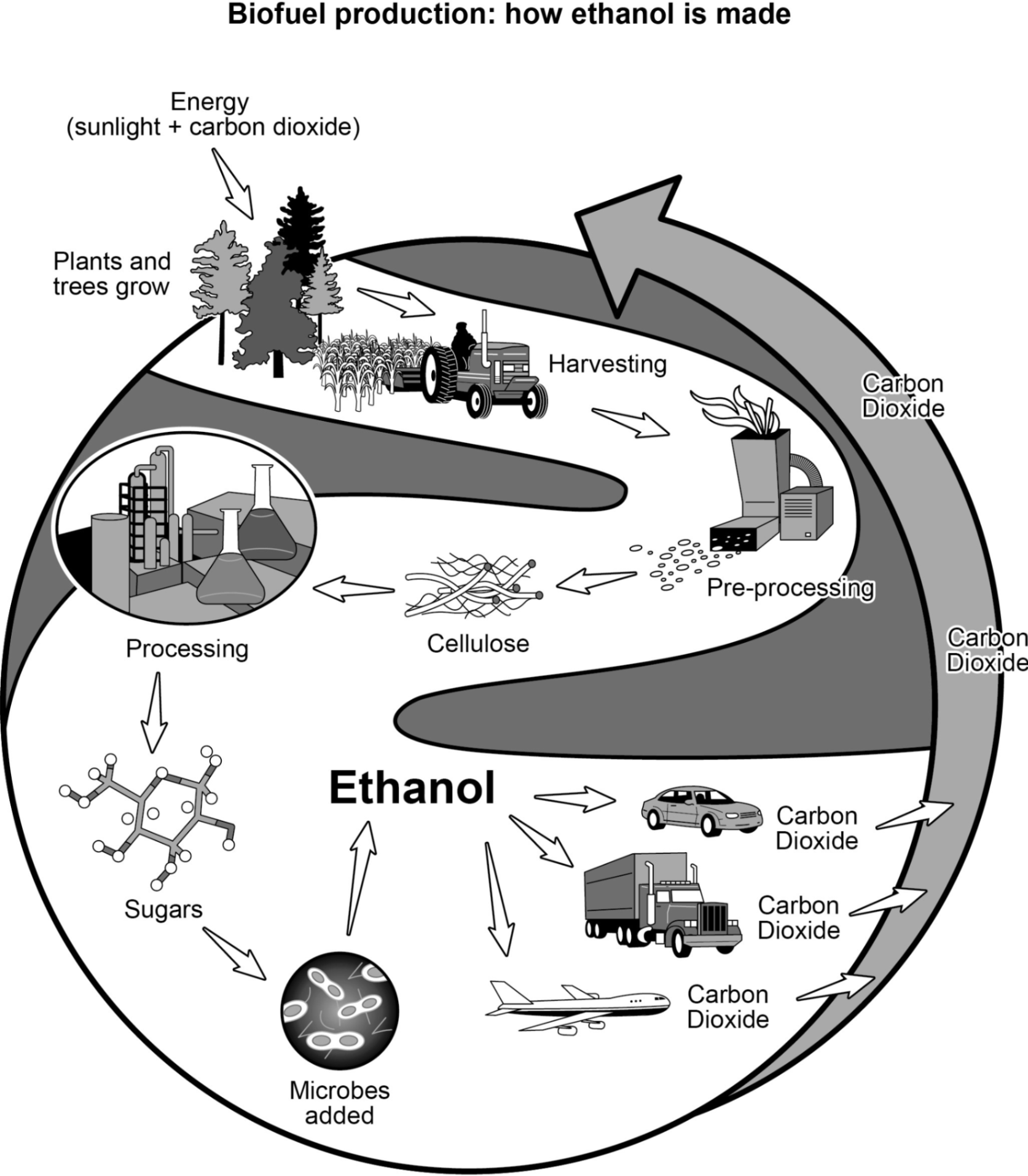
如果只盯着箭头看,这道题大概可以拆成几个连续环节:
植物生长 → 收割 → 预处理 → 提取纤维素 → 转化成糖 → 微生物发酵 → 产生乙醇 → 用于交通运输 → 燃烧产生二氧化碳 → 植物再次吸收二氧化碳
但真正值得注意的是最后一步。
二氧化碳并没有让流程结束,而是重新进入植物生长环节。
所以,这道题的核心不是:
“乙醇一共经历了多少步?”
而是:
“乙醇是如何被生产、使用,并重新回到整个生态循环中的?”
这就是写好这道题的第一个关键。
二、第一步:先判断它是“线性流程”还是“循环流程”
很多同学看到流程图,就习惯从左到右、从上到下逐个描述。
这个方法本身没有错,但对于循环流程来说,很容易漏掉最重要的信息。
这道题的 Overview 不应该只是说:
Overall, there are several stages in the production of ethanol.
因为这句话虽然没错,但基本没有告诉考官你看懂了什么。
更好的处理方式,是先抓住两个信息:
第一,整个过程可以分成几个大的阶段;
第二,最后形成了一个闭环。
例如可以概括为:
植物原料的生长与准备 → 工业加工并生产乙醇 → 燃料使用 → 二氧化碳重新被植物吸收
这样一来,Overview 就不再是“重复题目”,而是在告诉考官:
我已经理解这张图的整体结构。
三、不要按箭头写,先把流程“分组”
这是流程图从中等分数走向高分时非常重要的一步。
这道题虽然有很多具体操作,但实际上可以压缩成三个大的阶段。
第一阶段:原材料准备
植物首先利用阳光和空气中的二氧化碳生长。
成熟之后被收割,并经过预处理,从植物材料中获得纤维素。
第二阶段:工业转化
纤维素进入加工环节,被转化成糖。
随后加入微生物,通过发酵产生乙醇。
第三阶段:燃料使用与循环
乙醇被用于汽车、卡车和飞机等交通工具。
燃烧之后产生二氧化碳,而这些二氧化碳又可以被植物吸收,从而重新进入下一轮植物生长。
这样整理之后,原本一堆箭头,就变成了一个非常清晰的结构:
Raw materials → Processing → Fuel → CO₂ → Plants
这比机械地数“第一步、第二步、第三步”更重要。
四、真正解决 First / Then 问题的方法:让信息自己“接起来”
First、Then、Next 并不是错误。
问题在于,如果每句话都依靠这些词来推进:
First, plants grow... Then, they are harvested... Next, the plants are processed... After that, cellulose is extracted... Then, cellulose is converted...
读起来就会非常机械。
更自然的方法,是让上一环节的产物成为下一句话的信息中心。
比如:
The plants are harvested and pre-processed, during which cellulose is extracted.
下一句自然接:
The cellulose is then transported to a processing facility, where it is converted into sugars.
这里真正起到衔接作用的,不只是 then,而是 cellulose。
再往下:
The resulting sugars are subsequently fermented by microbes to produce ethanol.
然后:
The resulting biofuel is then used to power various forms of transport.
你会发现,整段文章其实形成了一条非常清晰的信息链:
plants → cellulose → sugars → ethanol → biofuel → CO₂ → plants
这就是流程图写作中非常实用的“信息接力”。
五、被动语态有用,但不要为了高级而强行使用
流程图里经常出现:
- is harvested
- is processed
- is extracted
- is converted
- is transported
- is used
这是因为流程图的重点通常是发生了什么,而不是谁做了这件事。
所以,被动语态确实非常适合这种题型。
但也不要把整篇文章写成“被动语态大串烧”。
例如:
Plants grow by absorbing energy from sunlight and carbon dioxide from the atmosphere.
这里用主动结构反而更自然。
真正需要被动时再使用:
The plants are harvested and pre-processed.
高分并不是“被动语态越多越好”,而是句式能够服务于信息表达。
六、一篇更值得学习的8+写法
下面这篇范文不需要靠堆砌生僻词来制造“高级感”,重点是看它如何组织信息。
Sample Answer
The diagram illustrates the cyclical process through which ethanol, a type of biofuel, is produced and used.
Overall, the process can be divided into three main stages, beginning with the growth and preparation of plant materials, followed by their conversion into ethanol, and ending with the use of the resulting fuel in transport. Importantly, carbon dioxide released during fuel combustion is subsequently absorbed by growing plants, making the process cyclical.
The cycle begins with trees and crops growing by using energy from sunlight and carbon dioxide from the atmosphere. Once mature, the plants are harvested and undergo pre-processing, during which the raw vegetation is broken down and cellulose is extracted.
The cellulose is then transported to a processing facility, where it is converted into sugars. Microbes are subsequently added to the sugars to facilitate fermentation, resulting in the production of ethanol. The resulting biofuel is then used to power various forms of transport, including cars, trucks and aeroplanes. When the fuel is burned, carbon dioxide is released back into the atmosphere, where it can once again be absorbed by growing plants, thereby completing the cycle.
七、从TA、CC、LR、GRA四个维度,看这篇范文为什么能冲高分
1. Task Achievement:不是“写全”,而是“抓住重点”
这篇文章没有把所有箭头机械罗列出来,而是在 Overview 中明确指出:
- 三个主要阶段
- 从植物原料开始
- 最终产生乙醇
- 乙醇用于交通运输
- 二氧化碳重新进入植物生长环节
尤其是最后一点,决定了这道题到底是线性流程还是循环流程。
如果 Overview 把这一点漏掉,即使下面的细节基本都写对了,文章的整体完成度也会受到影响。
2. Coherence & Cohesion:衔接不是靠连接词堆出来的
高分流程图最容易被忽略的一点,就是:
连接词只是表面的衔接,信息之间的自然承接才是更重要的。
例如:
cellulose → sugars → ethanol → biofuel → carbon dioxide
前一个环节的结果不断成为后一个环节的起点。
这样即使没有大量使用 First / Second / Third,读者依然能够非常顺畅地跟着流程走下去。
3. Lexical Resource:精准比生僻更重要
这篇范文使用的词并不算特别“炫”。
真正值得积累的是这些准确的过程表达:
| 表达 | 用途 |
|---|---|
| be harvested | 被收割 |
| undergo pre-processing | 经过预处理 |
| cellulose is extracted | 提取纤维素 |
| be converted into | 被转化为 |
| facilitate fermentation | 促进发酵 |
| produce ethanol | 产生乙醇 |
| power various forms of transport | 为不同交通工具提供动力 |
| be released into the atmosphere | 被释放到大气中 |
| be absorbed by plants | 被植物吸收 |
| complete the cycle | 完成循环 |
流程图里的高分词汇,很多时候不是“难词”,而是准确的过程动词。
4. Grammatical Range & Accuracy:复杂句要有功能
例如:
The cellulose is then transported to a processing facility, where it is converted into sugars.
以及:
When the fuel is burned, carbon dioxide is released back into the atmosphere, where it can once again be absorbed by growing plants.
这些句子使用了定语从句、状语从句以及被动结构,但目的并不是炫技。
它们真正解决的是一个问题:
如何在一个句子里把“过程”和“过程之间的关系”说清楚。
这才是流程图写作里更值得学习的复杂句。
八、最后总结:流程图高分,核心不是 First 还是 Then
如果下次再遇到流程图,不妨先问自己三个问题:
① 它是线性流程还是循环流程?
先判断整体结构,再开始写。
② 能不能把若干步骤合并成几个大阶段?
不要把每一个箭头都当成一个独立句子。
③ 上一步产生的东西,能不能成为下一句话的主角?
例如:
plants → cellulose → sugars → ethanol → CO₂ → plants
一旦能够沿着这条信息链组织语言,流程图就不再是一堆孤立的步骤。
所以,真正的高分流程图写作,并不是把:
First → Then → Next → Finally
换成:
Initially → Subsequently → Thereafter → Ultimately
那只是“换了一套连接词”。
真正的提升,是从描述箭头变成理解流程。
而这道《剑19》Test 3的乙醇流程图,最值得练的恰恰就是这一点:
先看懂系统,再开始写句子。