
流程图概述必须包含哪些信息,如何写清楚? 今天用《剑21》中的一道真题为例,带你拆解流程图概述怎么写,既能涵盖必要信息,又能彰显逻辑。 文末有直接可用的概述写作公式,记得看到底!
原题展示
The diagram below shows how one type of desert, known as a rain-shadow desert, is formed.
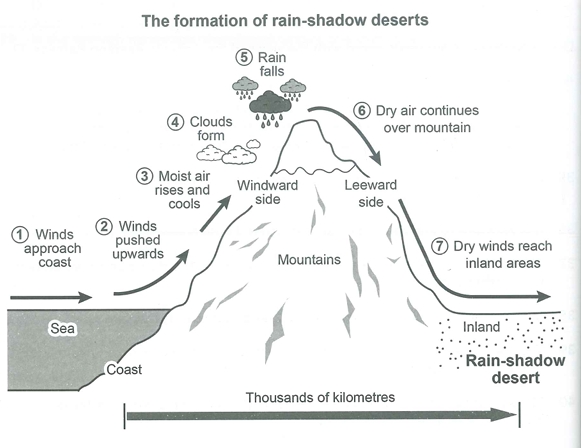
题目展示的是由于高山阻隔海洋水汽而导致沙漠形成的自然过程,可分为两个阶段:steps 1-5,steps 6-7。
一、简单说下第一段 (Introduction),如何改写原题
原题改写原则:意思不变,能换则换。本题替换了3处:
| 替换项 | 示例 |
|---|---|
| 1. 换动词 | show ➔ illustrate/demonstrate/display |
| 2. 换定语 | below ➔ given |
| 3. 换句子结构 | 被动句 ➔ 名词短语 |
改写后:
The given diagram illustrates the formation process of the rain-shadow desert.
二、概述 (Overview) 怎么写?
概述必须包含的信息:
- 整个过程有几步 (steps) 或几个阶段 (stages)?
- 简述过程:用3-5个动词,将过程从起点到终点串连起来。
“概述”示范:
Overall, it takes seven steps to form a rain-shadow desert thousands of kilometers away from the sea. Winds carry water from the sea, but the water drops as rain around the top of the mountains. As a result, dry air moves to the inland and gradually creates a desert. (49 words)
- 第一句: 指出整个过程有7步。
- 第二句: 起点是风从海上带来水汽;在山顶,水化作雨。
- 第三句: 干空气吹到内陆,最后沙漠形成。
从起点到结尾,用了4个动词:carry ➔ drop ➔ move ➔ create 简述过程。在概述段,尽量不用图中给出的动词,留给细节段用。
第二句和第三句分别写了迎风面 (windward side) 和背风面 (leeward side),提示考官细节段将依此思路把过程分为2个阶段描述,贴合7分评分标准要求的“信息逻辑清晰”。
三、看看考官的概述
《剑21》中考官给出的概述:
This process of forming a rain-shadow desert includes three main stages. Firstly, the wind pushes moist air up from the sea, then rain clouds form and rain falls over the mountains, finally, dry air reaches the inland areas, to make the desert. (42 words)
两句话包含的信息:过程有几个阶段;过程中的重要动作节点。
- 第一句: 整个过程包括3个阶段:steps 1-3, steps 4-5, steps 6-7。
- 第二句: 简要描述这3个阶段,用 firstly, then, finally 连接。
问题出在第二句: 考官用的5个动词中有4个都是图表中的原词(pushes, form, falls, reaches)。 这样写很清楚,但是给后面的细节描述造成困难,因为你需要换一批动词去写细节段,否则“词汇”项会扣分。考官作为英语母语使用者,词汇储备自然不成问题,但你若在概述段照搬图中原词,到了细节段就会发现自己无词可用。
考官的写法稳妥,但是本文的概述更胜一筹,胜在实用,胜在为全文谋篇布局。聪明的读者,你认为呢?
四、流程图概述公式
记住下面的概述句式,遇到流程图直接上手写。
📌 第1句:交代流程的步骤
- 公式: Overall, it takes [数字] steps to [结果或产品]
- 例: Overall, it takes seven steps to form a rain-shadow desert.
📌 第2-3句:用4-5个动词串起全过程
- 公式: 可适当使用顺序词,如 first, initially, then, after that, finally, eventually 等。
- 例: First, the wind laden with moist air climbs up from the sea, which causes rainfall over the mountains. Finally, dry air moves to the inland areas and gradually the desert develops.